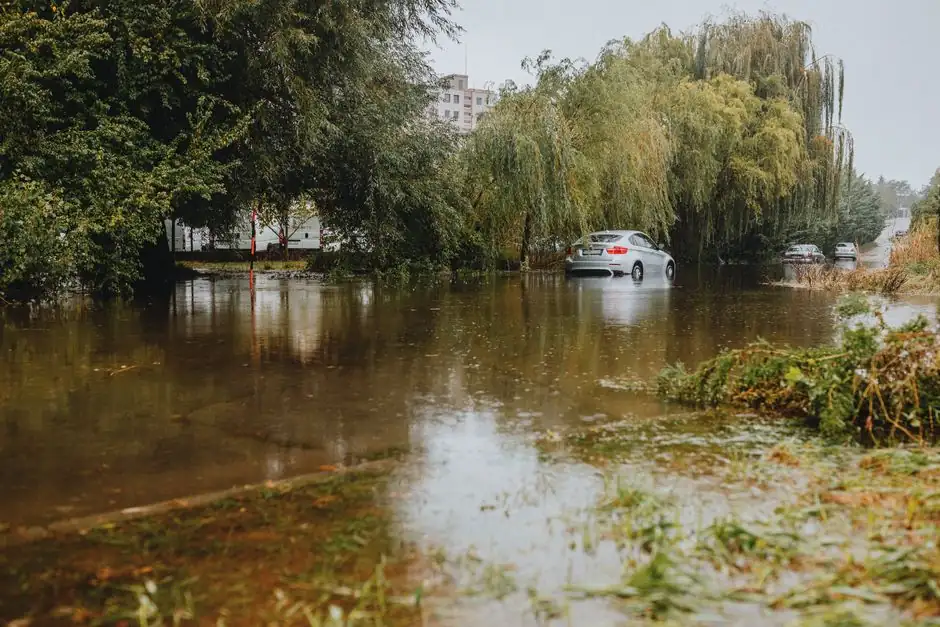
Your basement is flooding after heavy rain in Yakima because the ground around your foundation is already saturated, and the water has nowhere to go but through the path of least resistance - cracks, drain tiles, or a failed sump pump. Yakima's clay-heavy soil and older stormwater infrastructure simply can't absorb or move a 1-inch-per-hour rain fast enough, so it pushes against your foundation until it finds a way in.
We've been drying out basements from Selah to West Valley for years, and the causes are almost always the same handful of problems. Below we break down exactly why it happens here, what you can do about it, and when it's time to call in a crew.
The short answer: Yakima's soil and stormwater system
Basement flooding after heavy rain in Yakima is a soil-drainage problem first and a plumbing problem second. The Yakima Valley sits on a thick layer of clay and silt that absorbs water slowly. When a storm dumps half an inch in an hour, that clay turns into a sponge that's already full - and any additional water runs along the surface until it hits your foundation.
Once it's there, hydrostatic pressure builds. Water weighs about 62 pounds per cubic foot, and a saturated yard can push thousands of pounds against a basement wall. That pressure is what forces water through hairline cracks, cold joints, and floor drains that were never designed for that volume.
Older neighborhoods in Yakima - especially around Barge-Chestnut and the streets near Yakima Avenue - have storm sewer lines that were sized for a smaller city. During a heavy rain, those lines back up, and the water has to go somewhere. Sometimes that somewhere is your basement floor drain.
Why Yakima gets basement flooding after heavy rain
Yakima basement flood causes come down to three things: how fast the rain falls, how well the soil drains, and how well your home's water-management systems are maintained. We see all three fail at once during the big spring and fall storms.
First, the rain itself. Yakima averages about 8 inches of precipitation a year, but that average hides the fact that most of it falls in a handful of intense events. A storm that drops 1.5 inches in two hours is rare but not unheard of - and that's the kind of event that overwhelms a sump pump or a floor drain.
Second, the soil. The clay layer under much of Yakima has a percolation rate measured in tenths of an inch per hour. Compare that to sandy soil, which can absorb 2 to 4 inches per hour. When the clay is saturated, water has nowhere to go but sideways - toward your foundation.
Third, the systems. A sump pump that's 10 years old may still run, but its impeller is worn and its check valve may be stuck. A floor drain that hasn't been snaked in five years is half-blocked with roots and sediment. These are the weak points that give out first.
If you live in an area with a high water table - parts of Terrace Heights and the lower streets near the Yakima River - the problem is even more direct. The river rises, the water table rises with it, and your basement becomes the lowest point in the neighborhood.
The most common causes we find in Yakima basements
When we pull up to a flooded basement in Yakima, we're looking for one of these six failures. In our experience, about 80% of calls trace back to the first three.
1. Sump pump failure or undersizing
A sump pump that's rated for 1,800 gallons per hour can't keep up with a storm that's delivering 2,500 gallons per hour into the pit. And if the power goes out - which happens in Yakima during windstorms - a non-battery-backup pump stops entirely. We've seen pits fill in under 15 minutes.
2. Clogged or collapsed drain tiles
Homes built before 1980 in Yakima often have clay or orangeburg drain tiles around the footing. Those tiles crush, root-infiltrate, and silt up over 40+ years. When they fail, water that used to be carried away from the foundation now dumps directly against the wall.
3. Foundation cracks and cold joints
Concrete block foundations - common in mid-century Yakima homes - are especially prone to water intrusion at the mortar joints. A hairline crack 1/16 inch wide can let in 50 gallons of water in a single storm.
4. Poor grading and downspout discharge
If your yard slopes toward the house, or your downspouts dump within 3 feet of the foundation, you're feeding the problem. We recommend extending every downspout at least 6 feet away and regrading so the soil drops 6 inches over the first 10 feet.
5. Window wells without covers
A window well that fills with water during a heavy rain becomes a direct funnel into your basement. A $40 clear cover prevents most of these.
6. Sewer or storm line backups
When the city storm system surcharges, water can push back through your floor drain. This is a sewage backup cleanup Yakima WA situation, not just a wet floor - it requires disinfection, not just drying.
How to stop basement flooding after heavy rain in Yakima
You can prevent basement flooding after a storm in Yakima with a combination of water diversion, pump maintenance, and sealing - but you have to address the source, not just the symptom. Here's what actually works, in order of impact.
- Test your sump pump before every rainy season. Pour 5 gallons of water into the pit and time how long it takes to discharge. If it takes more than 30 seconds, the pump is weak. Install a battery backup or a water-powered backup pump - power outages are common here.
- Clean your gutters and extend downspouts. A clogged gutter sends water straight down the foundation. Extend every downspout 6 to 10 feet from the house, and make sure the discharge point slopes away.
- Regrade your yard. The soil should drop 6 inches over the first 10 feet from the foundation. If it slopes toward the house, add compacted fill and reshape it.
- Seal cracks and joints. Use hydraulic cement for active leaks and a polyurethane injection for hairline cracks. For block foundations, a masonry sealer on the interior can help, but exterior waterproofing is the permanent fix.
- Install a backwater valve on the floor drain. This one-way valve prevents city stormwater from backing up into your basement. It costs $150 to $400 installed and is required by code in some newer Yakima builds.
- Keep your drain tiles flowing. If you have a sump pit, the drain tiles feed it. If they're clogged, the pit stays dry while water builds under the slab. A plumber can camera the lines and jet them clean.
If you've done all of that and water still comes in, the problem is likely the drain tile system itself or the water table. That's when you need a professional assessment - and often a basement water removal Yakima WA crew to get the standing water out before it causes mold.
What to do when your basement floods in Yakima WA
When your basement floods in Yakima WA, the first hour matters more than the next three days. Mold can start growing on wet drywall and carpet within 24 to 48 hours, and the longer water sits, the more structural damage you'll have.
Here's the order we recommend:
- Safety first. If the water is above electrical outlets or you smell gas, get out and call 911. Don't wade into a flooded basement with the power on.
- Shut off the power to the basement at the breaker panel - only if you can reach it without stepping in water.
- Stop the source if you can. If it's a burst pipe, shut off the main water valve. If it's stormwater, you can't stop it - focus on removal.
- Document everything. Take photos and video before you move anything. Your insurance adjuster will need them.
- Call for water removal. A wet/dry shop vac can handle an inch or two, but a real flood needs truck-mounted extraction. Our emergency water removal Yakima WA team can be on-site the same day to extract standing water and start drying.
- Move valuables upstairs. Documents, electronics, and furniture should be moved out of the wet zone immediately.
Don't wait to see if it dries on its own. Yakima's dry climate helps, but a flooded basement releases hundreds of gallons of moisture into the air, and that moisture wicks into framing, insulation, and drywall. We use structural drying Yakima WA equipment - commercial dehumidifiers and air movers - to pull that moisture out before it becomes a mold problem.
Common mistakes homeowners make after a basement flood
The biggest mistake we see after a basement flood in Yakima is waiting. Homeowners assume the water will evaporate, or they run a box fan for a day and call it done. That's not how it works.
Here are the other mistakes that turn a manageable cleanup into a $10,000 repair:
- Not documenting before cleanup. Without photos, your insurance claim can be denied or underpaid. Take pictures of the water line on the walls, the damaged items, and the source.
- Using a shop vac and stopping there. A shop vac removes standing water, but it doesn't dry the framing, the subfloor, or the wall cavities. Moisture trapped behind drywall leads to black mold within a week.
- Running the HVAC system. If the basement is flooded, running your furnace or AC can spread mold spores through the whole house. Turn it off until the space is dry.
- Throwing away wet items too soon. Many items - photos, documents, some electronics - can be restored. Our content cleaning and pack-out Yakima WA team has saved family photo albums and tax records that looked ruined.
- Ignoring the sewage risk. If the floodwater came up through a floor drain during a storm, it may be contaminated with sewage. That's a category 3 water loss and requires professional disinfection, not a mop.
If you're not sure whether your floodwater is clean or contaminated, assume it's contaminated until a pro tells you otherwise. It's cheaper to disinfect than to get sick.
When to call a professional
Call a professional when the water is more than an inch deep, when it's been sitting for more than 24 hours, or when it came from a sewage or storm backup. Those three conditions mean you're dealing with contamination, structural moisture, or both - and a shop vac won't cut it.
We also get called when homeowners have tried everything and water still comes in. If you've cleaned your gutters, extended your downspouts, tested your sump pump, and sealed your cracks, and your basement still floods after heavy rain in Yakima, the issue is likely the drain tile system or the water table. That's a bigger fix, and it's worth getting a professional opinion before you spend money on the wrong solution.
At Yakima Water Restoration, we handle everything from extraction to drying to mold prevention. We work directly with your insurance company, and we can usually tell you within an hour of arriving whether your basement can be dried in place or whether we need to remove drywall and carpet. If you're dealing with a wet basement right now, don't wait - the cost of drying goes up every day you delay.
Frequently Asked Questions
Why does my basement flood after heavy rain in Yakima?
Your basement floods because Yakima's clay soil can't absorb heavy rain fast enough, so water builds up against your foundation and finds cracks, drain tiles, or a failed sump pump. Older storm sewers can also back up into floor drains during intense storms.
How do I stop my basement from flooding in Yakima WA?
Test your sump pump before every rainy season, extend downspouts 6-10 feet from the foundation, regrade your yard to slope away, seal cracks, and install a backwater valve on your floor drain. If those fail, the drain tile system needs professional attention.
Does heavy rain cause basement flooding in Yakima Washington?
Yes. Yakima averages about 8 inches of rain a year, but most falls in intense storms. A 1.5-inch storm in two hours can overwhelm a sump pump and saturate the soil, pushing water through foundation cracks and floor drains.
Who do I call for basement flooding in Yakima?
Call a water damage restoration company that handles extraction, drying, and mold prevention. Yakima Water Restoration responds same-day, works with your insurance, and can be reached at 509-516-0862.
Can basement flooding be prevented in Yakima?
Most basement flooding is preventable with proper grading, downspout extensions, a maintained sump pump with battery backup, and sealed foundation cracks. Homes with failing drain tiles may need a French drain or exterior waterproofing for a permanent fix.
Get help with water damage restoration in Yakima
If your basement is wet right now, we can be there today. Our team handles emergency extraction, structural drying, and mold prevention for homeowners across Yakima County.
Call 509-516-0862 and we'll get your basement dry and your life back to normal.